
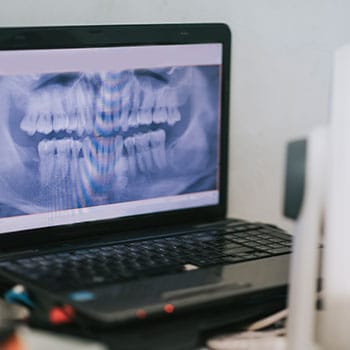
Low-radiation imaging that helps catch issues early.
Pediatric digital x-rays at North Shore Smiles
Digital sensors mean less radiation than traditional film, faster images, and no waiting on processing. Routine bitewings begin only when a child's back teeth are touching tightly enough that we can't see between them visually — usually around age four, sometimes earlier or later depending on development.
What's included
- Bitewings introduced once back teeth are touching, not on a fixed age schedule
- Frequency varies by cavity risk: every 12–18 months for kids with no decay history, every 6–12 months when something is being monitored
- Panoramic 'growth and development' image typically once between ages 6 and 9 as adult front teeth come in
- Explained to kids simply as 'taking pictures of your teeth'
Already have insurance? See our accepted plans, ask about our in-house membership for families without insurance, or review payment options.
Common questions
What parents ask about digital x-rays
Are digital dental X-rays safe for children?
Digital X-rays use very low radiation and are taken only when they help diagnose or monitor a child's oral health.
Why might my child need dental X-rays?
X-rays can reveal cavities between teeth, development concerns, injuries, and problems that are not visible during a visual exam.